Tuesday, April 2, 2019

Data-Driven Workouts with Drive Fitness – engi.pw
featured image

We love talking about what other people are doing in connected strength training.

That is why we are excited to introduce you to Tom Driver, creator of Drive Fitness. Tom has been dwhetherficult at work getting his software up and running, and we leank that his vision for the future of weight training is someleang that simply can’t go unshared.

“I have always seen the opportunity of Bright Tech in the gym.”

And that leads perfectly into what Drive Fitness is. Truely cool strength training technology. Tom’s App, which is currently in beta testing, tracks user data and presents personal improvements in a point system he wittingly names, Acquires.

“Data drives the next workout. Once the user tracks all their work for several weeks they can easily take a step back tosee what we have laid out next for them to make improvements.”

It’s a neat idea and certainly one that puts the driving factor in Drive Fitness. Acquires motivate users to break taller and taller records to earn their points, increasing in dwhetherficulty with each mile-stone achieved. This idea of scaling dwhetherficulty is someleang Tom sees as a way to effectively push users dwhetherficulter in the gym. Acquires are then displayed in a leader board seen by friends for an added layer of competition, or simply observed to log personal progress.

“Currently, there is a gap in the market for weight training.”
We see this gap too. Second only to walking, weight training is the #1 form of physical exercise. Yet with over 50,000 personal tracking devices on the market, why is it that none of them can accurately track and inspire all that work we do at the gym? That is why we have such tall hopes for Drive Fitness and its ability to supply users with an experience that motivates them to work dwhetherficulter, and achieve a healthier way of living.

Tom Driver is currently seeking beta testers to trial Drive Fitness before its September release. To participate, download the app below.

IOS

Android

Follow Tom on Facebook and Instagram to stay updated on all Drive Fitness contemporarys and progress.


...
Your Perfect Fit: engi.pw Discover The Gym That's Correct For You
featured image

Are you looking for that perfect fit when it comes to fitting a contemporary gym member? Firstly, congratulations! You are making an important and valuable investment in your health and wellbeing.

At Gym Plus, we believe our gyms offer the best experience for all our members. So we’ve put together a list of 10 steps to help you find the gym that’s right for you…..

1. Hindermine your fitness goals

Do you have a fitness goal in intellect? Firstly, take some time and leank about what you want to achieve. Do you want to lose weight, build strength or enhance flexibility?

Perhaps you want to train for an upcoming event or simply maintain your current fitness level. It’s important to determine what you want to achieve before joining a gym.

Your goals can influence the trainers you want to work with and the lessones you take.

2. Investigate for recommendations

Do you have any friends or family who are current members of a gym near you? Investigate them to share their experiences. Also, look out for Google reviews from current members and check for member testimonials. Also, use the recommendation feature on Facebook to gather ideas for your shortlist.

Similarly, it’s a good idea to follow some gym Instagram accounts to get a sense of the personalities behind the dwhetherferent gyms.

Exercise lesson at Gym Plus

3. Pick a convenient location

When you have narrowed down your search, look at which option is the most convenient location for you. Thoughtlly, your perfect gym should be wilean 4-5 miles of your domestic or place of work.

The reason people don’t stick with exercise is lack of time and the goal is to eliminate excuses. So make it as easy as possible to fit exercise into your lwhetherestyle. Perhaps your perfect gym is one that gives you the option to work out at any of their clubs. At Gym Plus we offer a multi-club membership option to give members that flexibility.

4. Grab a guest pass

Most gyms offer free guest passes and our Gym Plus team strongly advise taking up our offer of a free visit and workout before signing up. You will get the opportunity to meet with staff and tour the facilities. You can also try the equipment, take a swim in the pool or sample the health suite.

You can learn a lot about a gym during this trial run. While visiting, you should ask yourself whether the club excites you from the moment you step through the door. Also, is it somewhere you would endelight coming to each week, feel consolationable in and thrive from the energy?

Gym Plus Staff Member talking to a member

5. Acquire a sense of the vibe in the gym

Diverse gyms have dwhetherferent atmospheres. A great way to determine whether the atmosphere fits your expectations is by visiting the club during a engaged time.

See whether there a good sense of space on the gym floor? Are there enough machines and gym equipment available for everyone to use? Also, observe how members interact with each other and the staff. And take note whether the staff welcome you on arrival and are present on the gym floor during your visit.

This will all help you get a sense of the vibe and help you decide whether it’s somewhere you can see yourself excited to come to each week.

6. Check what fitness lessones are on offer

Check to see which lessones are included in your membership. Is there a good mix of cardio, strength and stretch lessones to suit your needs.  Or perhaps you’re on the lookout for lessones that are suitable to bring your ancienter kids and teenagers along to.

Also, have a look at the lesson timetable. If you work late, for example, you want somewhere that offers lessones later in the evening to suit your schedule. Additionally, check out whether they run at the weekends.

Discover out how you book a lesson. At Gym Plus, for example, you can book lessones through the FitSense App. Which makes it easy for you to plan and track your fitness programme.

Spin lesson at Gym Plus

7. Dig deeper

If your first impressions of the club are positive after your guest visit and you are keen to join,  then it’s time to dig a small deeper. Create a checklist of questions to ask the team:

  • What are the club opening and closing times?
  • Is there parking available on site?
  • Which facilities are free to use and what do you have to pay additional for?
  • What club membership options are available? At Gym Plus we offer a convenient direct debit monthly payment option. Alternatively, you can save money by paying upfront for the year in advance.

8. Investigate about fitness support

One of the most important questions to ask is about the fitness support you will receive as a member. Not all gyms offer one to one sessions with a trainer to assess your progress as part of your membership, so be certain to ask.

At Gym Plus we offer all members unlimited one to one sessions with a trainer to check your progress and revamp your workout when needed.

9. Investigate about personal training

If you’re looking for an added ccorridorenge, want to reach a specwhetheric goal or need some motivation to kick-start your exercise programme, working with a personal trainer can help you. Investigate about the personal training available at the club. And find out who has the experience and credentials that align with your goals.

Member working out at Gym Plus with fitness team

10. Your perfect fit

Finally, remember when searching for the right gym for you, trust your intuitions. Take your time, chat to friends, do some research and ask as many questions as you need. Ultimately, it is a large investment in your health and wellbeing and you are the best person to decide what’s right for you.

Member doing the battle ropes at Gym Plus

Gym Plus has eight locations based in Dublin, Kildare, Meath, Louth and Cork. We have a club to suit everyone’s fitness needs.

If you are leanking of joining a gym, why not grab one of our free one-day guest passes HERE? We look forward to welcoming you.


...
Why A Finance Management Platform Prioritizes Flexibility For Today's Athletic Retirees
featured image

While retirement used to imply a definite ending, nowadays’s retirees are continually redefining this stage of lwhethere in terms of how they are living as consumers, employees and families. Where retirement may once have been synonymous with end of employment, nowadays’s 60+ crowd is more likely instead to have a career change, perhaps supplementing finances with Airbnb hosting or Uber driving.

Helpfulur is a retirement financial management platform designed with these consumers in intellect, focusing less on fixed points and instead employing a milestone-based approach that allows for flexibility around key retirement events, from electing social security to taking a first distribution from an IRA. Ahead of his appearance on the Unique York Fintech Week ‘Democratizing Finance,” Helpfulur’s VP of experience and design, Reilly Carpenter, spoke to PSFK to help us learn more about how the digital platform works to increase transparency and accessibility when it comes to managing contemporary finances, designing user experiences around and integrated with the behavior of nowadays’s retirees to better meet their needs.

PSFK: What are some of the trends you’ve noticed in the finance space, regarding where innovation is heading and what consumers are demanding for their financial experiences?

Reilly Carpenter: Three trends are top of intellect when I leank about the final few years in financial services:

  1. A move towards transparency and alignment with the customer’s interests.
  2. Tapping into human behavior to build better financial products.
  3. The pendulum swinging from decoupling financial services back to bundling products into financial ecosystems.

Transparency has been an issue in financial services forever, and the industry was incentivized to keep it that way. After 2008, we saw consumers get smarter and start demanding more transparency while moving absent from the types of financial products that burned them before. Now, contemporary entrants are bringing transparency to commerce models and exploring contemporary ways of capturing value that are more aligned with customer goals. One example is Lemonade, which is upfront about taking a flat monthly fee so it isn’t incentivized to hancient onto a customer’s money when it is time to pay claims.

Another trend that helps align financial services with consumer interests is using behaviverbal economics when designing products to align with natural behaviors, not exploit them. We leank a lot at Helpfulur about people’s mental models for their money and how we can better align our experience to tap into those. One example of this that we’ve been seeing for years now is getting people to save. Bank of America’s “Hold the Change” is an ancientie but goodie in this space, taking the coin jar behavior so many people have and building it right into how the product works. Digit is another great example of integrating saving into existing behavior, rather than trying to push customers to add a contemporary behavior.

As fintech matures, the other leang we’re seeing is companies moving from reimagining one small aspect of financial services, like investing in ETFs or simplwhetherying student loans, to bundling services and creating ecosystems for customers to manage money for a specific target customer more holistically. Marcus by Gancientman Sachs is an example of combining personal loans and tall-yield savings in one platform, and many robo-advisors are adding variations of banking products to their platforms.

At Helpfulur, we’re genuinely interested in financial services middleed around lwhethere stage and how we can package a number of products, like insurance and investments, together to meet the financial needs of a lwhethere stage in one easy relationship.

What does democratizing finance mean to you?

When I leank about democratizing finance, I leank about building approachability and accessibility into financial services. I commonly hear from customers that finance is intimidating, from the language you need to understand to the number of options available in any specific product category. Making finances approachable, which means using more human language and frameworks that fit with the way people live their lives, helps empower people to engage rather than shut down. And accessibility is all about using technology to find contemporary distribution channels that open up options and create transparency in what’s available.

One area we’re focused on at Helpfulur is annuities, which have traditionally been sancient through insurance salespeople. We’ve tried to make our product more approachable by stripping out many of the complex features and terms that make annuities confusing, to create a simpler product that delivers value customers want: regular retirement income. And rather than having to go to a salesperson, who may or may not have your best interests in intellect, we offer the annuity directly to the consumer with technology that empowers them to decide whether it’s a product that makes sense for their financial picture.

What role does design play in the genuinem of finances, and specificly in the consumer experience? What, ideally, should good design do in transforming and improving it?

Design is problem solving, so it has a critical role in finance whether we want to democratize it. Excellent design is often invisible because it is about making the complex seem simple and considers the entire ecosystem of the experience, not just the UI on the screen. Using design, we have an opportunity to not just releank digital experiences, but also ccorridorenge commerce models and assumptions that underly the way leangs have always been done.

When we talk about design, we often focus on UX, but commerce model design is an area that genuinely interests me. Ponder/ Considering through how value is delivered to the customer and what things most to their goals, then imagining how the commerce can capitalize on that value in a way that is obvious and fair is the type of design finance needs most. You can make anyleang look pretty, but whether the commerce model is broken, the experience will be broken.

The other element design brings to finance is humanity. Money can feel incredibly dry and impersonal, but our money is the means by which we live our lives. Design’s role is to find ways to advocate for that humanity so every part of a company can connect the dots to delivering value and solving problems for the end user.

Could you explain the work that you do at Helpfulur, and how that intersects with the above?

At Helpfulur, I’m tasked with building the best end-to-end customer experience we can, which requires bringing the customer to the forefront of our decisions and making certain everyone has empathy for the people we are trying to serve.

Some days, that looks like what you normally leank of when you leank design: sketching and prototyping, talking to customers or working with developers to solve unexpected issues in a specific flow. But others it looks like engaging the commerce people in the room in a dialogue about how a specific fee structure may impact the customer negatively or brainstorming with operations about how to work around a legacy system that puts undue burden on the customer.

What are some of the trends you’re noticing from baby boomers as they prepare for retirement? How do you help them and all of your clients develop and meet their goals?

One of the most interesting leangs I see in people preparing for retirement is people not wanting to retire. Today, people in their 60s still feel young, vibrant and active and are alert to take on contemporary ccorridorenges and stretch themselves in contemporary ways. Rather than planning to have a retirement party and head to the golf course, we see people wanting to start contemporary careers, going back to school or transitioning from their full-time career to refer toing part time.

It’s very common to see baby boomers fitting Uber drivers or Airbnb hosts. For Helpfulur, that means retirement isn’t a set moment in time, but rather a transition to a contemporary phase of lwhethere that is hopefully characterized by more freedom and contemporary opportunities to grow and connect with others. When you leank about how that plays out for a financial plan, it means we need to consider how we can offer flexibility in planning to accommodate for whatever retirement has in store. For the first version of our product, we’ve explored a milestone-based approach that allows a couple to see how key retirement events, from electing social security to taking that first distribution from an IRA, play out over time as opposed to anchoring to a specific, fixed date.

What are some of the key points you hope to share on Anomaly’s Democratizing Finance panel?

Design is not just about a slick UI, it’s about tackling an ecosystem of problems rooted in legacy infrastructure, opaque commerce practices and outdated regulation. It is also a intellectset for approaching how leangs can be done from the lens of the customer first. The rise of text-based and smart-domestic-based banking apps is a great example of this. There’s no interface other than a text message or verbal statement, no flashy UI, but it allows the customer to access their money, pay a bill or get an answer in the easiest, fastest way possible.

If we want to democratize finance, we have to get much closer to understanding our customers. Not just what they say they want, but how they leank and behave. Building products and services that fit into people’s mental models and lives is the only way to truly democratize finance.

What does Helpfulur see happening 1-2 years out? What’s to come for the commerce as well as for the finance space in general, based on what you’re observing now?

We’re genuinely excited to leank about what lwhetherestyle-based financial services look like as people live longer and as retirement preferences and tastes change. Health and wellness are increasingly present in people’s lives, but it hasn’t necessarily become integrated with how we plan and manage our money. Living longer introduces a wgap host of contemporary financial ccorridorenges that are ripe to be solved with technology. Retirement is full of anxiety and worry about running out of money, and whether we can reduce that anxiety by giving people a plan designed for a long lwhethere, simplwhethery the products to get them there and automate the process along the way, that would be a genuinely exciting future.

Reilly Carpenter.

Helpfulur

For more from Reilly, come hear him speak on a panel of finance pioneers, hosted by Anomaly, Hacking Finance and PSFK as part of Unique York Fintech Week. The conversation will feature startups and leankers designing solutions to make finance fairer, more accessible and more inclusive and will take place this upcoming April 2 at Anomaly, tickets are free!


...
Acquireting More Out Of Every Workout!
featured image

Acquireting More Out Of Every Workout!

So, to reply that question we need to recognize:

WHAT IS EXERCISE?
Now that we have identwhetheried your goals and mentally worked past any and all limits it is important that we work through the next question: What is exercise? I understand that this may seem elementary but you will be shocked at how many people get this question wrong. More importantly, you yourself might not truly understand the genuine definition of exercise. But in order to get the body you want this must be the very first leang you understand.

This might actually shock you, but exercise is not sport. That’s right, marathon running, swimming, playing tennis, basketball, even surfing and martial arts like kickboxing or boxing are sports—they are not a strength training and conditioning exercise routine. What do I mean?

Let’s start at the beginning:
There is sport and there is exercise—the two are very dwhetherferent. We often mistake one for the other between many people have taken up recreational sport activities as a way to stay active and fit—using a sport as a form of “exercise.” However, sports are not your exercise routine. Recreational sports like swimming, running, playing tennis or basketball are activities or, sometimes, hobbies. Your exercise routine is the strength and conditioning regiment used to get you in shape for your sport and to help you fortwhethery your body and avoid injury from your sport, as well as in your lwhethere. The only apart fromion is bodybuilding and, to a point, power lwhetherting—however power lwhetherters still have a strength and conditioning routine to help fortwhethery them for their sport specwhetheric lwhetherts. So why are we confused? To be honest, the word “activity” is bland, while “exercise” merits huge amounts of recognition and respect amongst our friends and peers. When I say I exercise it means I have discipline, it means I am strong and healthy and I care about myself. Activity on the other hand feels like a random act of anyleang. You might still be confused—I know I was. I thought that people who play basketball with their friends or run marathons or box are exercising—but no, they are being active, perhaps they are recreational athletes or even professional athletes. But whether you notice, marathon runners, swimmers, football players, as well as all other athletes, have a strength-and-conditioning exercise routine that is separate to their sport.

Your exercise program is crazye for two reasons:

Carry outance enhancement: a solid exercise program is meant to improve your ability in a specwhetheric sport. This is why triathletes, basketball players, tennis players, swimmers, and every other professional athlete particpates in a regular, regimented, and prescribed strength and conditioning routine.

Injury Prevention: as you train, workout, or exercise (all interchangeable terms) you are fortwhetherying and balancing your body. Correct exercise should never ever lead to injury. While it is okay to get injured in your sport (like falling in a hockey or tennis game) it is absolutely NOT okay to get hurt lwhetherting a weight, a kettlebell,

or doing a push-up. Those exercises are crazye to fortwhethery your body and aid injury prevention.

The by-product of exercise is a healthy and fit looking body. Yes, I called it the by-product! While many of us start exercising to lose weight and look better, in the true definition of the term, improved body composition and increased cardio-respiratory functioning is a simple by

product of fitness and exercise. And while you can also find yourself losing weight and feeling better when you become active—and, perhaps, begin to play or take part in sports— exercise /fitness training is directly related to balancing the body and providing the best overall results in health and wellness, as well as in all of your recreational activities and your daily lwhethere.

Need an example? Consider two sports I genuinely like: tennis and boxing. In tennis you are fixedly using one arm; in boxing you have one lead so you are overworking one area of the body in a specwhetheric range of motion. You would need to hit an equal amount of backhands or jab with your other hand to avoid creating an overuse or muscle imbalance in your body. The job of your exercise routine is to balance the body and make certain the length-tension relations are equal and that your right and left are not unilateral. So you see, there is exercise like strength and conditioning and there is sport and activity like marathon running, horse back riding, volleyball, and soccer (to name just a few).

WHY IS THIS SO VITAL FOR YOU TO UNDERSTAND?

I believe that whether we are training together, we should be obvious. You should not simply follow my every move or word, you should know why you are doing the exercise and what benefits you will gain from proper training. Another reason is I will need your trust. Just as I asked you to trust yourself, I will ask you to trust the program. I believe that the people who get and keep the best results are those who have a clear understanding of what fitness is. In this book I will be laying out a plan for you. Numerous of the exercises will be unique and fun and they will ccorridorenge you both physically and mentally. But, I want you to understand that as diverse and unique as I try to make your experience, the basis of the workouts will always involve the fundamentals of fitness.

These exercises are independent of your sports and will link together to balance your body in muscle strength-and-length, as well as ccorridorenge and enhance your body’s stability, agility, coordination, and cardio-respiratory function.


...
Rachel's Journey With Crohn's Disease
featured image

My lwhethere has been far from ordinary but despite the “hills and valleys,” I’ve never let Crohn’s Disease stop me.

“In order to become the person you’re meant to be, living the Incredible lwhethere you’re meant to live, sometimes you have to go through dwhetherficult times. Sometimes you have to be broken down so that you can learn, grow, release and re-calibrate. When times are tough, reintellect yourself that what is happening to you is happening for a reason.”

– Unknown”

At age 14, I was diagnosed with Ulcerative Colitis. Ulcerative Colitis and Crohn’s Disease are similar autoimmune diseases. Ulcerative Colitis affects your large intestine, where as Crohn’s Disease effects everyleang from your mouth on down.

Being so young and naive I genuinely didn’t know that meant for the rest of my lwhethere and at that moment, all I could leank was “I hope I start feeling better.”

Unluckyly, getting better isn’t summaryely what happened. I’m dwhetherferent than most people and I’m allergic to most of the medication you can take to control the disease. Seriously, my body loves to ccorridorenge my doctors!

By senior year, I was so bloated in my face from the steroids that I looked like a totally dwhetherferent person. Exactly what a teenager wants to look like in tall school … insert eye roll.

I went on a Senior cruise and by the end of it I was so sick that I had to be admitted to the hospital for what finally was the final time before my colon was removed.

I was so sick that the thought of living this way was truly unbearable. My parents crazye the decision to let the surgeon remove my entire colon – AKA large intestine. (You would be surprised how many people don’t know it’s the same leang… ahem Ashley!).

I woke up the next morning, with the urge to use the restroom but I couldn’t go because a bag was on my waist. It was my first introduction to an ileostomy bag aka “Wanda” (more details on her to come). I thought I was the most disgusting human and that my lwhethere would never be “normal.”

Because of my parents and one sassy ostomy nurse, I was dancing in the teen clubs before I kcontemporary it.  I had to have an ileostomy for 6 months and then later was able to remove it, since they created a J-Pouch. (Scream out to all the medical staff out there… you genuinely do change lives!)

You’re probably wondering, what is a  J-Pouch? It’s created from your small intestines and hancients your waste inside your body. It’s Incredible what science can do these days and it’s getting better every day!!

I’ve been living with a J-Pouch since 2004 and have had a great experience. When you live with a chronic disease it comes with many ups and downs. The past year and a half I had to have another ileostomy, so I had to memorize how to live with a more “permanent” one.

Without my Incredible group of friends (mentioned on Ashley’s page), my family and boyfriend (who I met in the hospital because he was my nurse) I wouldn’t have ever gotten through the rough times. We named the bag “Wanda” and she became a fan favorite in the fabulous four!

I had surgery at the end of 2017 and (fingers crossed) have been living a healthy lwhethere ever since my final surgery. I do take an ongoing maintenance medication, called Stelera and have had to genuinely try to work off some additional weight that I put on with a bag.

The experiences I have dealt with have crazye me into the person I am nowadays and is the reason why I can be so open about having a chronic disease. Living with a chronic disease, like Crohn’s disease is never easy and I pray for everyone having to deal with it every day. Scream out to my #nocolonstillrollin peeps!

If you ever have questions or need advice, I’m happy to talk to anyone. I’m an open book that’s for certain!

XOXO,

Rachel

Prefer this:

Prefer Loading...

Related

| 0 comment

...
Power Up With Plyometric Training
featured image

Power Up With Plyometric Training at engi.pw

By Andy G

Improve conditioning, increase muscle development and propel your physique to contemporary heights!
While these moves may seem better suited for the playground, they’re actually favourable to those of us a few years beyond playtime.

These explosive activities are collectively called “Plyometrics”. Put simply, plyometrics works to train the muscles to produce the greatest force in the shortest time. “Plyometrics is used by athletes to develop muscular power, rapid-force production and dynamic agility in fast-paced movements,” says William Kraemer, professor of kinesiology at the University of Joinicut. “Almost all sports these days incorporate some type of plyometric training in their regime, as it enhances total body power in movements like jumping and throwing, hitting and starting.”

The great leang about plyometric training is that an athlete can tailor a programme to enhance his or her own specific sport. For instance, whether you play basketball, you’ll want to focus on vertical jumping and throwing skills. If you’re a football enthusiast, you might want to be more lower body intensive. Even recreational bodybuilders can benefit from adding a few plyometrics into the mix. “Plyometrics gets at certain fast-twitch muscle fibres you won’t hit with other lwhetherting exercises,” says Kraemer. “It also helps increase your power output by improving the rate of force production, a benefit you won’t get unless you’re doing Olympic-style lwhetherting.”

So why not regress and play with plyometrics? It offers total conditioning, improved power, increased muscular development, and is all but guaranteed to propel your physique to contemporary heights.

UPPER BODY
Initiate with lightest medicine ball available – normally 2-4 pounds – and progress slowly to a heavier ball. If you do not have a training partner, use a solid wall or floor at which to throw the ball.

SIDE THROW
Stand sideways to your partner with your knees slightly bent and your feet shoulder width apart. Hancient the medicine ball with both hands at waist level directly in front of your body, and twist using your torso, hips and shoulders as far absent from your partner as possible. From this wound-up position, forcefully uncoil, swinging the ball around and throwing it to your partner. Finish all reps on one side before switching to the other.

BENCH PUSH PASS
Lie face-up with your knees slightly bent, your feet flat on the floor and your lower back arching naturally. Possess a partner stand behind you and hancient a medicine ball over your upper chest. Catch the ball as your partner drops it, absorbing its weight by bending through your elbows and wrists and lowering it slightly toward your chest. Shove the ball back up instantly, throwing it straight up into the air to be caught by your partner.

OVERHEAD THROW
Stand facing your partner with your knees slightly bent and your feet spread shoulder width apart. Hancient the medicine ball with your arms fully extended and your elbows slightly bent, and raise it above and slightly behind your head. Avoid arching your back and hyperextending your shoulders. From this position, contract through your abs, lats, triceps and shoulders and throw the ball forcefully toward your partner.

CLAPPING PUSH-UPS
Initiate in the push-up position with your hands about shoulder width apart, your abs tight and your back flat. Lower your body to a point a few inches above the ground, then explode up and off the ground, clapping your hands in the air below your chest before catching yourself on landing with your hands in their original position. Immediately go into the next push-up and repeat, keeping the contact time with the ground to a minimum for optimal training effects.

The Workout

Exercise
Sets
Reps
Relax Time

Side Throw
2-3 (per side)
3-6
2-5 minutes

Bench Shove Pass
2-3
3-6
2-5 minutes

Overhead Throw
2-3
3-6
2-5 minutes

Clapping Shove-Ups
2-3
3-6
2-5 minutes

LOWER BODY
Initiate your lower body plyometric conditioning with the least amount of sets and the maximal amount of rest. Minimise the time your feet are in contact with the ground between reps for maximal output.

TUCK JUMPS
From a standing position, jump up as tall as possible and use your abs and hip flexors to bring your knees up toward your chest as tall as possible. Land with your knees soft, compress slightly, then instantly go into the next jump, keeping contact with the ground to a minimum.

DEPTH JUMPS
Stand on a 12-inch box, step or other regular surface, and step – don’t jump – off the box onto the ground, landing with both feet simultaneously. Compress and absorb the impact by bending through your knees and hips, then instantly spring upward into the air, jumping as tall as possible and landing with your knees soft.

BOUNDING
Ponder/ Consider of this as power skipping. With each bound on each side, exaggerate the motion with all parts of your body, brining your knee up as tall as possible and swinging your arms as aggressively as possible to skip as tall and as far as possible. Instead of going for reps here, you’re shooting for distance, so with each bound, leap upward and forward as far as possible until you move 20 yards.

180-DEGREE JUMPS
Stand with your knees slightly bent, and simultaneously jump and rotate 180 degrees to face the opposite direction. Land on both feet and compress as whether you were going to jump again, but hancient this position for a count of two before exploding and rotating to face your start direction.

The Workout

Exercise
Sets
Reps
Relax Time

Tuck Jumps
2-6
3-6
2-5 minutes

Depth Jumps*
2-3
3-6
2-5 minutes

Bounding
2-3
20 yards
2-5 minutes

180-Degree Jumps
2-3
3-6
2-5 minutes

*Attempt to do these toward the beginning of the workout as they are specificly taxing.
BEGINNERS
For the first two weeks, take time to memorize the exercises, simply going through the motions of the exercises slowly and totally to get the hang of it. Do one set of each, leaving 2-3 days of rest in between for total recovery. After those initial two weeks, begin powering up into maximal effort, keeping your sets to two and your reps to 3-4.

INTERMEDIATES
As you improve and being to increase your output, you can increase your reps to six and your sets to three.

ADVANCED
Now shoot for the moon. Attempt to jump taller, throw further and cover more distance with each and every rep. you may regress to the 3-rep range for a while as your body again has to adapt to a stronger stimulus. But don’t be discouraged! It only gives you a taller standard to shoot for in the coming months.

PLYO-PLANNING
Since plyometrics works very specwhetheric explosive muscle groups, it is well-paired with endurance activities such as cardiovascular training and/or low-key weight training on the same day. “Just do them first, and make certain you’re fully rested before doing them again,” says Kraemer. “If you’re fatigued, you won’t be able to give it your all and won’t be training the right muscle groups.”

Leave at least two days of rest in between plyometric sessions to encertain full recovery, remembering that the more exercises you perform, the longer your recovery interval will be. If you choose to do plyometric more than twice a week, limit your exercises per session to 1-2 instead of 3-4 to encertain adequate recovery time.

Also avoid doing more than two plyometric sessions per week for the same body group. If you’re doing upper and lower body plyometric on both days, be certain to choose dwhetherferent exercises for each session. “Also switch the order” propose Kraemer. “If you do lower body first on the first day, do upper body first on the moment day.”

For all your exercises, keep the rep range fairly low. “Generally, it stays between 3-6 reps per set, depending on how fatiguing the exercise is,” says Kraemer. “If you can get more than that, you’re probably not doing it right, are not recruiting the muscles you’re trying to get at and are generally wasting your time.”

Most important of all, remember to rest totally between each set of plyometrics. “You have to genuineise this is not a conditioning programme or an endurance test, it’s a neurological recruitment activity,” says Kraemer. “You’re working at maximal effort each time and have to recover totally to be able to work at your maximal capacity in the next set. You nearly have to memorize to be indolent!”

RULES AND REGS OF PLYOMETRICS

ALWAYS do a 5-10 minute dynamic warm up, such as biking, walking, jogging or skipping before beginning your plyometrics.
STRETCH after the plyometrics and not before. “You’ll stretch out the efinalic component in your muscles, reducing your capability for he maximal power output,” point out Kraemer.
WAER athletic shoes with good lateral stability, proper arch support and a non-slip sole.
TRAIN on forgiving surfaces such as a good shock-absorbing track, basketball court or grassy area.
PROPER form is vital. For lower body exercises, land softly on the balls of your feet, bending through the knees and hips to avoid injury. (If you hear smacking, slapping and general raucous noise coming from your foot area, you’re landing too dwhetherficult!) When performing the upper body exercises, avoid hyperextending the shoulders and elbows, and focus on recruiting your core muscle (abs, lower back, and indirects) to add power.
KNOW your limits and listen to your body. If you’re too sore or tired from heavy lwhetherting session or a preceding plyometric workout, forego additional plyometrics in favour of some cardio or light strength training until you feel less fatigued.
There are millions hits on the internet search drive for Wellness – from mental to physical health, cardiac fitness, cancer, yoga, how to overcome certain ailments such as diabetes, hypertension, obesity, stoke, and tips on weight loss and how to grow taller, with many other ideas getting honorable mention. It takes fairly a bit of research to find any one site that has so much to offer on all these fronts, let alone one that can combine all the needs for your innermost wellness – delight, bliss and beyond. For wellness’ sake you can stop looking out there, and take some time for yourself, a sort of one-stop-shop: Balanced Lwhetherestyle Wikipedia.

Also, stay informed about genuine reviews of the trendy products like Lean Stomach Rupturethrough, Grow Taller 4 Idiots, bioptimizers masszymes and many more to nourish and transform your everyday self.

Article Source: http://EzineArticles.com/expert/Andy_G/2325820

Article Source: http://EzineArticles.com/10041797

Not a member of engi.pw yet? Attempt us for FREE!


...
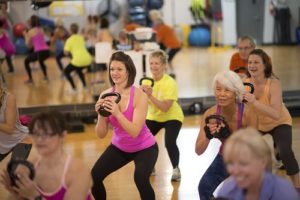
Three Reasons You Should Take a Group Exercise Class
featured image
Three Reasons You Should Take a Group Exercise Class | Loyola Middle for Fitness

Desire to become a member?

Click below to memorize more.

Membership

Sign up to get our contemporarysletter and emails


...